Thursday, August 25, 2011

Emergency Numbers to Have on Hand


EMERGENCY NUMBERS

COASTAL GEORGIA

• American Red Cross: 912-651-5300 (main number) or 912-651-5310 (disaster services)

• Emergency Help: 211 (area police, fire and medical)

• Office of Homeland Security Georgia Emergency Management Agency: 800-TRY-GEMA
(800-879-4362)

• Federal Emergency Management Agency:
770-220-5200 (Atlanta Regional Office)

• Livestock: 404-656-3667 (Department of Agriculture number for emergency planning for barnyard animals)

• Animal Protection: 404-656-4914 (Department of Agriculture number for which shelters for small animals are open)

• National Weather Service: 843-744-0303. Press 3 for tropical conditions.

• Salvation Army: 912-651-7420

• Georgia’s Insurance Commissioner’s Office:
800-656-2298

CHATHAM COUNTY

• AGL (natural gas): 800-GAS-LINE, 877-427-2464 (for repairs, if you smell gas)

• Candler Hospital: 912-819-6000 (general),
912-819-6037 (emergency room)

• Chatham County Emergency Management Agency: 912-201-4500; during severe weather, you can call the CEMA hotline: 912-644-8811

• Humane Society for Greater Savannah:
912-354-9515

• Memorial University Medical Center: 912-350-8000 (general), 912-350-9616 (emergency room)

• Public works, Chatham County: 912-652-6840; 912-652-6844 (water and sewer; county only); 912-652-6780 (recreation)

• Georgia Power: 800-390-2834 (for repairs and to report outages)

• St. Joseph’s Hospital: 912-819-4100 (general)

• Water Department, city of Savannah: 912-651-6460 or 311

LIBERTY COUNTY

• Red Cross: 912-876-3975 (civilian); 912-767-2197 (Fort Stewart station)

• Electric Services: Georgia Power, 888-660-5890; Canoochee Electric Co., 800-342-0134; Coastal Electric Cooperative, 912-884-3311 and
800-421-2343

• Water Services: Hinesville, 912-876-3564; Midway, 912-884-3344 or 912-332-4098 (emergency)

• Century Link (telephone): 912-369-9000

• Liberty Regional Medical Center: 912-369-9400

• Liberty County Emergency Management Agency: 912-368-2201; emergency hotline: 912-877-5362

BRYAN COUNTY

• Bryan County Emergency Services: 912-858-2799

• Health Department: 912-653-4331 Pembroke,
912-756-2611 Richmond Hill

• Evans Memorial Hospital: 912-739-2611

• Bryan County Sheriff’s Department: 912-653-3800

• Richmond Hill police: 912-756-5645

• Pembroke police: 912-653-4414

• Utilities: Georgia Power Co., 888-660-5890; Pembroke Telephone, 912-653-4389; Century Link, 912-369-9000

• Coastal Electric Cooperative: 912-884-3311 and 800-421-2343

EFFINGHAM COUNTY

• Effingham Sheriff’s Dept. non-emergency:
912-754-3449

• City of Guyton: 912-772-3353; public safety:
912-772-8745

• City of Springfield: 912-754-6666; public safety: 912-754-3061

• City of Rincon: 912-826-5745; after hours emergency: 912-210-6237

• County public works: 912-754-2141

BEAUFORT & JASPER, S.C., COUNTIES

• Hurricane Hot Line & Re-entry information for Beaufort County: 800-963-5023

• Storm threat and evacuation number:
866-706-8223

• Beaufort County Emergency Management:
843-255-4000

• Hilton Head Hospital: 843-681-6122

• Coastal Carolina Hospital: 843-784-8000

• Beaufort Memorial Hospital: 877-532-6472

• American Red Cross: 843-757-7437

• Beaufort County Animal Control: 843-255-5010

• Jasper County Emergency Management:
843-726-7606

• Jasper County Animal Shelter: 843-726-7799

• Palmetto Electric: 843-726-5551

• South Carolina Electric & Gas: 800-251-7234

• Beaufort-Jasper Water Sewer Authority:
843-987-9292

• Hispanic Outreach of S.C.: 803-419-5112

• S.C. Insurance News Service: 803-252-3455

INSURANCE NUMBERS

The following insurance claims numbers will be activated only after an emergency:

• 21st Century Insurance: 866-732-6139

• ALFA Insurance: 334-288-3900

• Allstate Insurance: 800-547-8676

• Assurance America: 888-223-8409

• Infinity Insurance: 800-334-1661

• Cotton States Insurance: 800-457-1658

• Farmers Insurance: 888-344-4343

• Georgia Farm Bureau: Contact your local agent

• GEICO Insurance: 800-841-3000

• GMAC Insurance: 800-468-3466

• Grange Insurance: 800-445-3030

• Liberty Mutual Companies Personal Market Customers: 800-225-2467

• Mercury Insurance: 800-987-6000

• Progressive Insurance: 800-274-4499

• Safeco Insurance: 888-723-3265

• Southern Mutual Insurance: 800-226-1919

• State Farm Insurance: 800-732-5246

• Travelers: 800-CLAIM33

• Unitrin Specialty Insurance: 888-253-7834

• USAA Insurance: 800-531-8222

Wednesday, August 24, 2011

Hurricane Irene's Latest Track Brushes Near Coast

A powerful hurricane is on a collision course with the Outer Banks of North Carolina and is expected to continue on a path less than 100 miles from Atlantic City.

On Wednesday morning (Aug. 24), Hurricane Irene is a Category 3 (sustained winds of 111 to 130 mph) hurricane just north of Cuba. The National Hurricane Center predicts a track that will slam the Bahamas tonight and reach the North Carolina coast Saturday afternoon or evening.

After moving directly over North Carolina's Outer Banks, the storm is expected to move back out over the Atlantic Ocean until it hits land again—likely on Cape Cod in Massachusetts. With the storm still three or four days away, the exact track is uncertain. But the latest National Hurricane Center models show it passing within 100 miles of Atlantic City on Sunday.

As of Wednesday morning, hurricane force winds of 115 mph extended 40 miles from the center of the hurricane and tropical force winds (39 to 73 mph) reached 205 miles.

"The eye wall of Irene will pass just offshore Sunday," Alex Sosnowski, Accuweather senior meteorologist said in a Wednesday morning update. "Weather conditions will deteriorate Saturday into Saturday evening with wind and rain increasing. Periods of heavy rain, damaging sustained tropical storm force winds with hurricane-force wind gusts and coastal flooding are possible Saturday night and Sunday."

Depending on the track of the storm, Atlantic City could see building surf from the storm as early as Thursday. The waves would peak in size Friday and Saturday as the storm approaches New Jersey

Tuesday, August 23, 2011

Hurricane Preparation Checklist


Hurricane Preparation Checklist

Make sure you have Renter's Insurance!!! Be sure you have your policy numbers and claims dept. phone number handy. Remember…the apartment community's insurance covers our buildings…not your belongings.
Listen to a NOAAWeather Radio for critical information from the National Weather Service (NWS).
Check your disaster supplies and replace or restock as needed.
Bring in anything that can be picked up by the wind (bicycles, lawn furniture on balconies, etc.)
Close windows and doors.
Turn the refrigerator and freezer to the coldest setting and keep them closed as much as possible so that food will last longer if the power goes out.
Turn off propane tanks and unplug small appliances.
Fill your car's gas tank.
Talk with members of your household and create an evacuation plan. Planning and practicing your evacuation plan minimizes confusion and fear during the event.
Learn about your community's hurricane response plan. Plan routes to local shelters, register family members with special medical needs as required and make plans for your pets to be cared for.
Evacuate if advised by authorities. Be careful to avoid flooded roads and washed out bridges.

What supplies do I need?
Water—at east a 3 day supply; one gallon per person per day.
Food—at least a 3 day supply of non-perishable, easy-to-prepare food.
Flashlight.
Battery-powered or hand-crank radio (NOAAWeather Radio, if possible).
Extra batteries.
First aid kit.
Medications (7-day supply) and medical items (hearing aids w/extra batteries, glasses, contact lenses, syringes, cane).
Multi-purpose tool.
Sanitation and personal hygiene items.
Copies of personal documents (medication list and pertinent medical information, proof of address, lease to residence, passports, birth certificates, insurance policies).
Cell phone with chargers.
Family and emergency contract information.
Extra cash.
Emergency blanket.
Map(s) of the area.
Baby supplies (bottles, formula, baby food, diapers).
Pet supplies (collar, lease, ID, food, carrier, and bowl).
Tools/supplies for securing your home.
Extra set of car keys and house keys.
Extra clothing, hat and sturdy shoes.
Rain gear.
Insect repellent and sunscreen.
Camera for photos of damage.

What do I do after a hurricane?
Stay alert for extended rainfall and subsequent flooding even after the hurricane or tropical storm has ended.
If you evacuated, return home only when officials say it is safe.
Drive only if necessary and avoid flooded roads and washed-out bridges.
Keep away from loose or dangling power lines and report them immediately to the power company.
Stay out of any building that has water around it.
Inspect your home for damage. Take pictures of damage, both of the building and its contents, for insurance purposes.
Use flashlights in the dark. Do NOT use candles.
Avoid drinking or preparing food with tap water until you are sure it's not contaminated.
Check refrigerated food for spoilage. If in doubt, throw it out.
Wear protective clothing and be cautious when cleaning up to avoid injury.
Watch animals closely and keep them under your direct control.
Use the telephone only for emergency calls.

Emergency Numbers:
FEMA : 800-621-3362
Red Cross: 866-438-4636

Monday, August 22, 2011

Hurricane Irene Update!


CEMA MONITORS HURRICANE IRENE: ENTERS MONITORING PHASE

NEWS

The Chatham Emergency Management Agency (CEMA) and the National Hurricane Center (NHC) are closely monitoring Hurricane Irene, and coordinating preparation and response activities.

Due to the current forecast of Hurricane Irene, CEMA is entering into the Monitoring Phase (Operating Condition 4). The Monitoring Phase serves as the advanced stage of readiness from an initial threat by a tropical cyclone. A threat refers to both direct or indirect impacts by a tropical cyclone to Chatham County - indirect impact typically involves the influx of evacuees from a threatened area and direct impact refers to the arrival of tropical cyclone-related hazards: storm surge, winds, tornadoes, and torrential rain leading to inland flooding.

Operations include a Level 3 activation of the Emergency Operations Center as well.

Minor changes with each advisory could result in major changes in the forecast track and storm dynamics. Still residents should use this as a time to review their plans and preparations. Residents should create an emergency supply kit, know where they will go if an evacuation is ordered and stay informed on the latest storm information.

Sign up to receive free email alerts from CEMA on our homepage. You can receive text alerts directly on your cell phone by texting 40404; in the subject type follow ChathamEMA. You are also encouraged to follow CEMA on Facebook and Twitter.


Thursday, August 18, 2011

When is Your Child's School Open House?


Public school starts soon, but parents and children already have their homework cut out for them if they want to kick the first-day jitters.

Whether you're a parent letting go of a child going off to the school for the first time or your kids are transitioning to a new school or grade level, the first day of school can induce anxiety, and some experts say the key to feeling calm this week is getting information and becoming familiar with the new surroundings.

Knowing ahead of time where things are, who will be teaching, who your kids will be interacting with and the school rules will make it easier for you and your child to feel comfortable on the first day or even the first week back at school.


POOLER ELEMENTARY SCHOOL:
The start of the new school year is right around the corner. Pooler Elementary, Kindergarten through Fifth Grade, will host their open house today, August 18th, from 4:00pm- 6:00pm.
To check out a list of the school supplies needed for these grades click on the following link:


WEST CHATHAM MIDDLE SCHOOL:
The open house for West Chatham Middle is scheduled for Friday, August 19, 2011.
It will begin at 3:00pm and will finish up around 5:00pm.

Let's Start this 2011-2012 School Year off with a BANG!

One more day until the weekend!


Wednesday, August 17, 2011

Basic Furniture Pieces Every Apartment Needs


Need to furnish your apartment on a budget? Don’t sweat it. If you’ve only got the cash to buy a few furniture pieces, just get the basics: a place to sleep, a place to eat, and a place to sit. Start out with these apartment furniture staples, and you’ll be set.

A place to sleep
Did you know that the average person spends more time on his bed than any other furniture piece? That’s because a bed is easily the single most important piece of apartment furniture you can get. Rest is important — for mind and body — and having a comfortable place to curl up each night is not just a luxury. It’s an essential.

To furnish your apartment with a bed, you’ve got a few choices: a standard mattress, a futon, or a sleeper sofa. When you shop for each of these items, remember that you’ll spend a lot of time in bed, so it’s important to test mattresses to find one that will provide you with good support.

A place to sit
You’re gonna want to sit down and relax in your apartment from time to time, so a sofa and a chair or two are apartment furniture staples you’ll want to buy fairly quickly for your new place.

While there are a lot of apartment furniture seating options available, a decent sofa meets most apartment needs better than other choices. When you come home after a long day at work and want to stretch out in front of the TV, a soft sofa will be just what the doctor ordered. Not to mention that you’re bound to have company over at some point, and, when you do, you’ll want to be able to accommodate everyone.

So if you’re thinking all you need for your apartment is just one cool recliner, you may want to re-evaluate. Get the recliner if you want it, but purchase it only after you have a sofa — a basic furniture essential.

A place to eat
A dining table is another one of those basic furniture pieces every apartment needs. The kind of dining table you need depends on your lifestyle. If you love to entertain, you might want to buy a larger table or a table that converts from a small size to a larger size.

But if you’re single and rarely have guests, you might prefer to get some alternative dining furniture pieces. A few sturdy tray tables that you can use by the couch or some comfortable stools for your kitchen breakfast bar may be all you need.

When you shop for apartment dining furniture, just remember that a nice place to eat provides a sense of comfort. A dining table can really make an apartment feel like a home.

What else?
After you’ve purchased these apartment furniture basics, you’ll be set for a while. But you may still find that you want a few other furniture pieces like a desk for paying the bills, a rolling butcher block for food prep, or an entertainment center to hold your DVD collection.

It can be tempting to furnish your apartment all at once. Just remember not to break your furniture budget. To start with, the basics are all you need.

Tuesday, August 16, 2011

A Guide to Tipping for Food and Services


To tip or not to tip, that is the question. But you also need to know who to tip, how to do it, and how much to give. Tipping for food and services can be mind-boggling, but these tipping guidelines will help you understand the best way to reward good service.

Who to tip
We often encounter tipping situations in the course of our lives, and sometimes it’s hard to know which service providers we likely ought to tip. As a rule, you should always tip waiters, bartenders, cab drivers, parking valets, hair stylists, nail salon aestheticians, massage therapists, restroom attendants, hotel doormen, bellhops and housekeepers. There are some folks you might tip once a year at the holidays, as well. Annual tips can include those for your postman, personal trainer, babysitter, nanny or day care provider.

Whew! That’s a lot of people. By the end of the year, your tips might be tapped out if you don’t know exactly how much to give.

How much to tip
Now let’s get down to the nitty gritty of tipping for services. There are many guides to tipping available online, and you can even download atipping guide app for your smart phone.

In general, these rules apply. For restaurant tipping, tip your server 15-20% of the bill. Tip 15% for basic, good service, increasing toward 20% for exceptional treatment. If your server assists you with a special occasion or helps with a special order, make sure you honor their efforts with a higher tip, as well. Keep in mind that servers may not be pocketing the entire tip, as they often share with other people on their service team like bus boys, runners and bartenders.

Also, before you tip, check your bill to make sure gratuity hasn’t already been added in. Restaurants will often automatically include an 18% gratuity charge for parties of 6 or more. And don’t forget that food delivery is like having a waiter who comes to your house, so be sure to tip the pizza delivery guy for his efforts.

Knowing restaurant rules of thumb are just the beginning. You also need to understand how much to tip other service providers like the ones mentioned previously. If you are stumped, you can always follow the 10-20% rule and tip 10% for average service and 20% for outstanding. This is a good tipping guideline for services for which you actually pay, such as taking a cab, hiring movers, or getting your hair done at a beauty salon. For services that are “complimentary,” tip $1-3 based on the level of service. This applies to people who help with your bags at a hotel or airport, valet parking attendants, restroom attendants and concierges. If someone provides you with service in any fashion, a small tip will always be welcome.

Tipping etiquette
Great! You know who to tip, and how much. Finally, there are rules of tipping etiquette that apply to how you leave someone a tip. Most people leave a tip on the table after dinner, which is perfectly polite. If you know you will be encountering a tipping situation, such as for valet parking or concierge services, be sure to have $1 or $5 bills on hand. If you are paying by credit card, you can leave your tip on the card, but keep in mind that many service providers prefer to get cash tips. Always reward good service with clean, folded dollar bills. (Avoid crazy origami bill folding that may look cool, but is a nightmare to put in a wallet!)

Bad service situations
How do you handle tipping when you’ve experienced bad service? First, remember that tipping is never required. It is always optional, and you can choose not to tip if you receive service that is truly unacceptable. If you decide to skip the tip, it’s polite to speak to the manager to let them know about the service problems and why you decided not to tip.

Tipping is an excellent way to acknowledge superior service, and it’s easy once you know the basics. Remember that tipping is different across the globe, so research international tipping guides before you share the wealth in a culture that is new to you.


Source:

Compare Renting Month-to-Month Versus a Longer-Term Lease


Once you’ve decided on an apartment to rent, you’ll have to consider the terms of the lease. Depending on where you live, you may have an opportunity to choose to rent month-to-month as opposed to the more typical one- or two-year rental period. When offered this option, some renters may choose to forgo the commitment of a year-long, or longer, lease and move forward with a month-to-month rental agreement instead.

Would longer-term or month-to-month renting be better for your situation? Here’s a comparison of the two to help you decide.

A month-to-month agreement offers more flexibility — on both sides. In a long-term lease, the rent amount generally cannot be raised as long as the original contract is held. A month-to-month lease, however, typically allows the landlord the ability to raise the rent more easily and more often, or to inform the tenant that the lease is not renewed, likely in favor of renting the unit instead to a tenant who wishes to make a longer-term commitment.

A month-to-month agreement, on the other hand, also gives the renter the opportunity to leave an apartment more quickly rather than have to stay or pay the penalty for breaking the lease.

Month-to-month agreements may be more expensive. It’s to the landlord’s advantage to have a renter commit to a longer tenancy. In exchange for giving up the security of a greater length of time, the landlord likely may charge a higher monthly rent for a shorter-term lease or month-to-month agreement.

Different laws cover month-to-month agreements and leases. Usually in a long-term lease, a clause will specify how much notice the landlord or the tenant has to give before terminating the contract (60 days is common). In a month-to-month agreement, the notification time is usually shorter. It is a good idea to be aware of your state’s provisions governing month-to-month rentals.

If you think you might need to move in a hurry, a month-to-month agreement might be more flexible for you. Be aware, however, that you might also be required to move quickly if the landlord decides not to continue the month-to-month agreement.

Landlords might not offer month-to-month agreements. Some landlords and apartment communities don’t want to offer short-term contracts, opting for longer-term commitments. After all, it is expensive to advertise and fix up a unit after a tenant vacates it. This is especially true in areas where apartments are in high demand: if you’re not willing to sign a long-term lease, the odds are better that another renter will. If you know you’ll only need an apartment for a short time only, you might want to look for agencies that specialize in short-term rental situations.

In short, a month-to-month rental agreement offers you more flexiblity, as you could leave the apartment more quickly. But a longer-term lease offers more stability, and often at a lower monthly rental price. Choosing the option that is better for you depends on your housing needs and expectations for the year or two to come.


http://www.movingtoday.com/compare-renting-month-to-month-versus-a-longer-term-lease/

Source:

Get Fit in Your Apartment Pool

The days of the dog paddle are over! Now you can get fit in your apartment swimming pool using a variety of activities from laps to lunges. Water fitness is a great option for low-impact, low-sweat exercise that burns calories and tones your body. Whether you are new to water fitness or just looking for fresh ideas for the pool, take a dip with our tips.

Get in the swim of things
If you know how to stay afloat, you can get fit simply by swimming in your apartment pool. Swimming burns an average of 10 calories a minute, so you can accomplish some serious calorie burning with any stroke from treading water to freestyle. The key is to keep moving: the faster you go, the more you burn.

Try challenging yourself by setting a goal of a certain number of laps or amount of time spent in the water. If you haven’t been swimming in a long time, start with a shorter session and add a lap or a few minutes every week. You can also beat boredom by mixing up your strokes and trying different swim workouts. You might make up your own workout by doing 5 laps or 5 minutes of each of your favorite strokes.

Not a great swimmer? Then it’s good idea to invest in swim lessons. When you know how to do the strokes properly, you will swim more efficiently, which means you can swim longer without getting worn out. Look around for adult swim classes; your local YMCA is a great place for year-round swim lessons, for instance. If you want to stick to your apartment pool, search online for private swim lessons and find an instructor who will come to you. That way you can learn at your own pace and pick a time when the pool isn’t crowded.

Go off the deep end
Low-impact pool fitness isn’t limited to swimming. Water aerobics have been around for decades and are a fun way to exercise in the pool. If your apartment community doesn’t offer a water aerobics class, you can learn the moves from a DVD like Water Gym or a fitness Web site. You can also adapt your indoor gym routine to the waterwith a few modifications.

Water jogging is another water fitness trend that is easy and burns loads of calories. Try the workout solo or find some friends to join you. You might even consider starting your own water aerobics workout group in your apartment community. You can hire an instructor or lead the group yourself.

Punch up your pool time
Water fitness is an excellent workout which doesn’t require any special equipment other than a swimsuit. However, you can push your workout over the finish line by adding special water exercise gear that adds weight or resistance to make you work harder in the pool.

Swimmers should consider getting a kickboard, pull buoy or swimming gloves. A kickboard frees up your hands so you can focus on leg strength as you swim. A pull buoy works similarly in that it keeps your legs afloat so you can concentrate on working your arms. Swim glovesadd extra surface area so there is more resistance for your hands as you slice through the water. If you are doing deep water jogging or aerobics, you might pick up a swim belt for safety to help keep you afloat.

There are many more types of gear to make your water workout fun, from goggles with music players to specialty swim wear. Check out your neighborhood sporting goods store or an online shop like Swim Outlet for the latest selection.

Your apartment pool can be so much more than a place to lounge and soak up some rays. Try jumping in and getting fit with a new water fitness routine that adds a splash to your regular workout.

source:
    http://www.movingtoday.com/get-fit-in-your-apartment-pool/

    Monday, August 8, 2011

    Support Our Troops Until They All Come Home

    Supporting the troops means paying attention to their needs both in the field and at home. It means understanding their lives both as warriors fighting for our nation, and as husbands and wives, parents, brothers and sisters, sons and daughters struggling to take care of their families.

    We owe our troops the opportunity to serve in the best planned, ebst equipped and best led military force in the world, and we owe them the peace of mind that comes from knowing that they and their families will be taken care of if they sacrifice life, limb or the ability to sleep without war's nightmares. We owe them not just thanks and best wishes, but action, and action in our nation's capital.

    Thursday, August 4, 2011

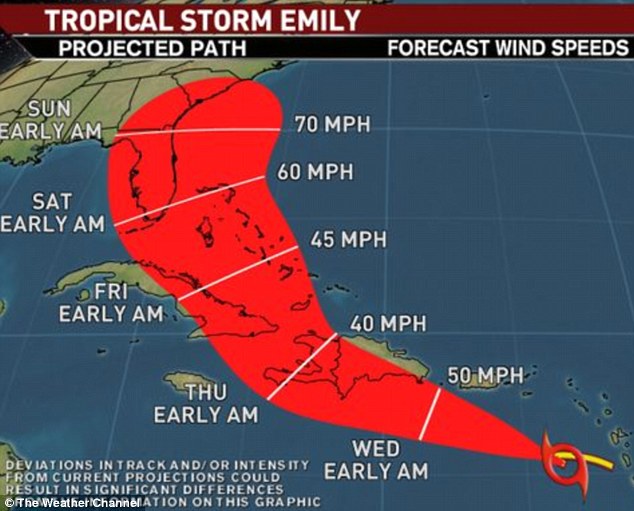
    Tracking Emily: Haiti Braces for Deluge from Tropical Storm Emily

    Update at 8 a.m. Haiti braced for another potential natural disaster Thursday as slow-moving Tropical Storm Emily loomed just off the coast of a nation where more than 600,000 people still live in makeshift encampments 18 months after a devastating earthquake.

    Emily remained disorganized and stalled just south of Hispaniola in the overnight hours but torrential rains were sweeping the Dominican Republic and southern coast of Haiti, where flash floods and mudslides have killed hundreds in previous storms. A day earlier, the governments of Haiti and the Dominican Republic both issued “red alerts’’ and urged residents to seek safe shelter.

    “For now, God is the only savior for me," Jislaine Jean-Julien, a street vendor who lost her home to the quake, told The Associated Press as she prayed in her tent in the capital of Port-au-Prince. “I would go some place else if I could, but I have no place else to go.’’

    For South Florida, the Bahamas and elsewhere, forecasters said impacts still remained uncertain, largely dependent on how the disorganized storm survived a rough crossing of the mountains of Hispaniola and Eastern Cuba and whether it would finally make an anticipated turn toward the northwest. Because of the uncertainty, the National Hurricane Center posted no tropical storm watches for South Florida but cautioned that residents should closely monitor Emily's progress.

    “Right now, it’s looking like a big sloppy tropical storm,’’ said Dennis Feltgen, a spokesman for the National Hurricane Center in West Miami-Dade County, said Wednesday.
    Whether that means damaging winds, power outages and flooded neighborhoods or just a blustery weekend won’t be clear until perhaps Friday.
    “The whole key is what’s left of the system when it reemerges somewhere off the coast of Haiti or Cuba,’’ said Robert Molleda, a meteorologist with the National Weather Service in Miami.

    At 8 a.m., Emily’s top winds remained around 50 mph and forecasters had nudged the track cone just off the South Florida coast. The meandering storm was expected to begin moving west-northwest around 7 mph sometime Thursday morning on a track crossing the southern peninsula of Haiti and eastern Cuba by Friday. From there, it would speed up as it passed through the Bahamas, sideswiping Florida Saturday and skirting the Atlantic coast before curving out into the ocean.

    But with the storm struggling against strong wind shear and absorbing dry air, uncertainty remained in the forecast. If the storm continues to move westward, it could bring it closer to South Florida before it turns. If Emily weakened, some computer models also suggested it continue drifting westward toward the Gulf of Mexico, pushed by surface winds rather than the upper level steering currents that guide well-organized tropical systems.
    “Weaker systems such as this are always a lot more difficult to forecast than the strong hurricanes that are out here,’’ Feltgen said.

    Forecasters expected Emily to remain a tropical storm as it moved up the Atlantic coast, becoming a hurricane only once it was far from the mainland. On its forecast track, Emily’s worst winds and rains would remain 100 miles or so off South Florida but emergency managers in Miami-Dade and Broward were monitoring its path closely.

    Wednesday, August 3, 2011

    Plan A Vacation.. It will make you feel better!


    A surprising article in The New York Times reveals that planning a vacation actually makes you happier than taking the trip. It’s true: you’ll feel better simply by booking your flight and hotel. That upbeat, pre-trip outlook can last up to eight weeks and will continue during your travels. When you return home, your happiness levels will return to normal. That is, until you start looking forward to your next holiday.


    Travel strategies
    Researchers found that while happiness levels increase as you anticipate your vacation, they do return to normal levels when you get back to the stress of work and everyday life. What does this mean?

    It may mean that, practically, you should plan several vacations throughout the year to experience the maximum mood-elevating bump from travel anticipation. You might try splitting your vacation time into shorter trips you could take more often, for instance. You could plan three-day weekend trips every couple of months. That way, you could experience the mental health benefits of trip planning year-round.

    Though the article doesn’t specifically mention it, it’s wise to plan a vacation that’s a fun, pleasant event. (Skip the visit to your cranky in-laws’ house.)

    Research your route
    Since researching and planning your trip is the most beneficial part of the process, spend some time online looking for new travel ideas. Dig in to travel blogs and learn about the newest hot spots. Hit the newsstand to pick up popular travel magazines like Budget Travel or Travel & Leisure. You might even stumble across some publications that focus on specialized vacations like scuba diving or adventure travel.

    These blogs and magazines are written by experienced travel writers who keep their eyes peeled for the coolest hotels, cities, beaches and adventures. You’ll also find reviews of local lodging and restaurants. Once you book your trip, keep researching restaurants and activities for the latest reviews. Dreaming about your trip for a few hours every week guarantees you’ll feel better as you imagine how your getaway will go.

    Vacation, take me away!
    Convinced you need to get away right now? Then hop online and start clicking. There are fantastic sites featuring travel deals that you can take advantage of immediately. Check out Last Minute Travel for insider info on cheap vacations to destinations where the hotels aren’t full and can offer lower rates. Living Social Escapes is another smart site to find discounted weekend getaways in unexpected locations like a historic mansion in Richmond, VA, or a hot air balloon trip in Temecula, CA.

    Travel Zoo also offers amazing deals on vacation packages around the world, including bargains on resorts from Las Vegas to the Virgin Islands. Don’t forget to look at newsletters from your favorite airlines and credit cards, like Delta Vacations and American Express Vacations. They often have deals with travel partners for discounted lodging and activities. If you need to get out of town ASAP, opt for a road trip to a nearby historic site or unusual roadside attraction. (Nobody wants to miss our nation’s smiley face water towers!)

    The secret to happiness is planning a vacation, and the more vacations you book, the better you’ll feel. Quick – book your trip now and experience the instant mood lift!